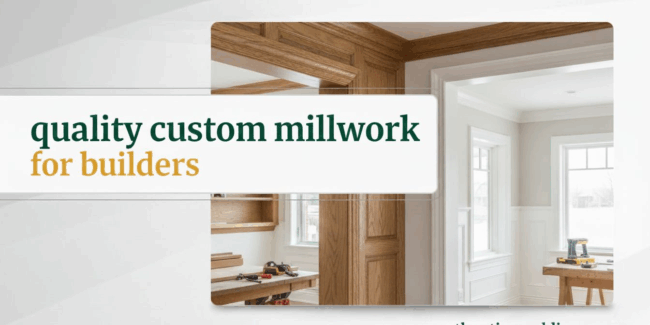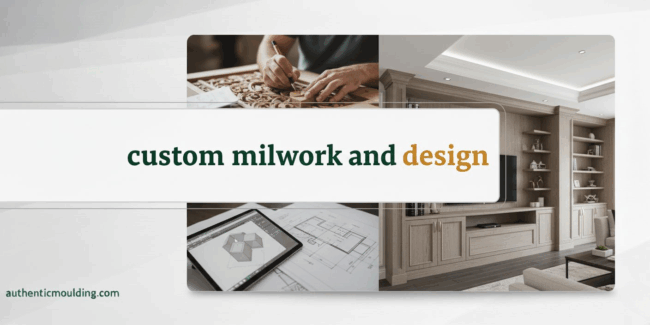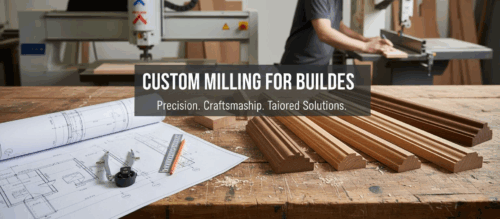
Custom milling creates wood profiles to your exact specifications using specialized machinery and custom-ground knives. For builders managing tight schedules, renovations requiring profile matches, or developments demanding consistency across dozens of units, custom milling compresses timelines while eliminating the compromises that come with stock inventory.
This guide covers how custom milling works, typical turnaround times, cost drivers you control, and the coordination strategies that keep trim packages moving from plans to installation without delays.
What Custom Milling Means for Builders
Custom milling creates wood profiles to exact specifications using specialized machinery. Unlike stock moulding, which comes in predetermined sizes and shapes, custom milling produces precise matches for renovations and enables unique architectural details that set high-end builds apart. When you’re working on a historic renovation or a development where consistency across 50 units matters, stock options often fall short.
The process works like this: a mill uses custom-ground knives to shape wood into the exact profile you specify. This could mean replicating 1920s crown moulding for an addition, creating oversized base trim for 12-foot ceilings, or matching an architect’s custom design across an entire project. The precision reduces on-site modifications because pieces fit correctly the first time, and installation moves faster when your crew isn’t trimming, shimming, or improvising workarounds.
Core Milling Services That Compress Schedules
When one shop handles multiple milling operations in-house, you’re working with a single timeline instead of coordinating between vendors. That shift alone cuts days off typical procurement cycles.
Ripping and Resawing
Ripping cuts lumber to specific widths from larger stock pieces. Resawing splits boards through their thickness. Both operations create exact dimensions your project requires, whether that’s 5/8″ casing instead of standard 3/4″ or custom jamb stock that matches non-standard wall depths. You might not find these dimensions in stock inventory, but a mill can produce them from standard lumber.
Planing and Surfacing
Planing removes material to achieve precise thickness and creates smooth, uniform surfaces ready for finishing. This step ensures dimensional consistency across every piece. Even 1/32″ variations create visible gaps or uneven reveals when you’re installing hundreds of linear feet, so mills hold tight tolerances to prevent installation problems.
Profile Knife Grinding
Knife grinding creates the cutting tools that shape your specific moulding profiles. The process starts with either a physical sample or CAD drawing, then produces steel knives that replicate every curve and detail. Once ground, these knives can reproduce the same profile across production runs of any length, whether you’re milling 200 feet or 20,000 feet.
Long-Length Crown and Base Runs
Many custom mills produce pieces up to 16 feet or longer, compared to the 8-12 foot maximums common in stock inventory. Extended lengths minimize joints and reduce mitering time. In open-concept spaces where seams interrupt sightlines, longer pieces improve visual continuity and cut installation labor.
Profile Matching and Knife Grinding Workflow
Replicating existing trim profiles follows a three-step process designed for accuracy. The workflow typically takes 3-5 business days, assuming the sample or specifications are clear from the start.
Sample or CAD Upload
You submit either a physical sample or digital drawings with precise dimensions. Physical samples work best for complex historical profiles where drawings might miss subtle details. A 12-18 inch piece gives the mill enough material to analyze the profile accurately. CAD files accelerate the process when you’re working from architectural plans, though the drawings need to show all radii, curves, and dimensions.
Digital Scan and Knife Design
Scanning equipment converts physical samples into digital profiles accurate to 0.001 inches. The mill then designs custom knives that replicate every curve, bead, and quirk of the original. This step accounts for how wood compresses during cutting, ensuring the finished profile matches the sample exactly rather than coming out slightly undersized.
Test Run and Sign-Off
A short production test produces 3-5 sample pieces before full production begins. You approve these samples in person or via detailed photos. This checkpoint prevents costly reruns if adjustments are needed, and it locks in accuracy before the mill commits to producing your full order.
Project Acceleration Strategy: One-Vendor Bundling of Trim, Doors, and Hardware
Consolidating moulding, door, and hardware orders through a single supplier eliminates coordination delays. Instead of tracking three separate purchase orders, delivery schedules, and points of contact, you’re managing one relationship and one timeline.
The difference becomes clear on larger projects. When the same team coordinating your custom crown is also building your interior doors and sourcing your hinges and locksets, they synchronize production schedules and deliveries around your construction phases. You’re not waiting for back-ordered hardware while finished doors sit in storage, and your trim doesn’t arrive three weeks before your drywall finishes.
- Single point of contact: One account manager coordinates estimates, approvals, production, and delivery across all product categories.
- Coordinated delivery: Trim, doors, and hardware arrive together or in planned sequences that match your installation schedule.
- Volume pricing: Consolidated orders often unlock better pricing than splitting purchases across multiple suppliers, and freight costs drop when everything ships together.
Step-by-Step Ordering Process: From Plan Take-Off to Jobsite Delivery
Most builders find this process faster than coordinating stock orders once they understand the rhythm. The key is providing complete information upfront so the mill can quote accurately without multiple clarifying conversations.
1. Submit Plans or Door List
You provide architectural drawings, door schedules, or detailed material lists showing profiles, quantities, and species. Vague requests like “colonial-style trim for a 2,400 sq ft house” require follow-up conversations that add days to the timeline. Complete submissions with specific profiles, linear footage, and species preferences generate faster, more accurate quotes.
2. Receive Fast Itemized Quote
Expect a detailed breakdown within 24-48 hours showing material specifications, profile details, linear footage or piece counts, and a delivery timeline. The quote includes production lead time, so you know immediately whether the schedule aligns with your framing or drywall completion dates. If the timeline doesn’t work, you can discuss rush options or adjust your construction schedule before committing.
3. Approve and Schedule Milling Slot
Once you approve pricing, production slots are reserved around your project deadlines. During busy seasons—typically spring and early fall—booking 7-10 days ahead prevents delays. Off-season work often moves faster, though rush options exist for critical-path situations regardless of timing.
4. Parallel Door Fabrication
While custom moulding runs through the mill, door fabrication happens simultaneously if you’re bundling products. This parallel processing compresses overall lead time. Instead of waiting for trim, then ordering doors, both arrive ready for installation in the same timeframe.
5. Staged or Same-Day Delivery
Choose delivery timing that matches your construction phases. Smaller projects often benefit from consolidated delivery, while larger developments work better with staged drops floor-by-floor. Staged delivery reduces on-site storage requirements and theft risk while keeping materials protected until installation crews are ready.
Turnaround Times, Rush Options, and Delivery Windows
Production schedules vary based on complexity, volume, and whether custom knife grinding is required. Setting realistic expectations prevents schedule conflicts and last-minute scrambling.
Same-Day Quick-Run Parameters
Small quantities of straightforward profiles can often be completed within 4-6 hours when material is in stock and no custom knife work is required. This works for quick repairs, small additions, or filling shortages discovered mid-project, typically up to 200-300 linear feet. Simple base, casing, or crown in common species like pine or poplar qualifies for same-day turnaround, while complex profiles or exotic species take longer.
Standard Production Lead Times
Custom knife grinding and full production runs typically require 3-7 business days depending on profile complexity, species availability, and queue position. Complex profiles with multiple curves or tight tolerances take longer than simple rectangular stock. Hardwoods often require 1-2 extra days compared to paint-grade pine or poplar because they’re denser and machine more slowly.
Staged Floor-by-Floor Drops
For multi-unit developments or large custom homes, deliveries can be coordinated to match construction progress. First-floor trim arrives when drywall finishes downstairs, second-floor material ships when framing completes upstairs. This approach keeps job sites organized and reduces the risk of damaged or missing materials.
Cost Drivers and How Builders Control Them
Custom milling isn’t always more expensive than stock. Volume orders often achieve comparable or better pricing, especially when you factor in the labor savings from pieces that fit correctly the first time.
| Factor | Standard Cost | Premium Cost |
| Wood Species | Pine, Poplar, MDF | Oak, Maple, Cherry |
| Profile Complexity | Simple rectangular or single-curve | Multiple curves, beads, intricate details |
| Volume | 1,000+ linear feet | Under 200 linear feet |
| Finish | Raw or primed | Pre-finished or stained |
Species and Grade Selection
Paint-grade pine or poplar typically costs less and ships faster since mills stock larger quantities of these species. They also machine more quickly, reducing production time. Premium hardwoods like red oak or maple increase costs by 40-80% and may add 2-3 days to production if special ordering is required. However, hardwoods are essential for stain-grade work or matching existing hardwood trim in renovations.
Volume and Setup Efficiency
Larger runs reduce per-linear-foot costs by spreading setup time across more pieces. Setup includes knife installation, machine calibration, and test cuts. A 2,000-foot crown run might cost 30% less per foot than a 200-foot run of the same profile because the setup time is the same regardless of quantity. This makes custom milling increasingly competitive with stock pricing as quantities grow.
Bundled Freight Savings
Combining doors, trim, and hardware into single shipments cuts freight charges by 25-40% compared to separate deliveries. One truck making one stop costs significantly less than three partial loads. Your receiving crew also spends less time managing deliveries when everything arrives together.
Quality Controls That Prevent Jobsite Rework
Quality checks happen before material leaves the mill, catching problems when they’re easy to fix rather than after installation when they’re expensive.
Moisture and Tolerance Checks
Moisture content is verified to match your installation environment, typically 6-8% for interior trim. Material that’s too wet or too dry will warp, cup, or gap as it acclimates after installation. Dimensional tolerances are held to ±1/32″ on width and thickness, ensuring consistent reveals and tight joints across all pieces.
Finish and Primer QC
Factory priming provides uniform coverage and a paint-ready surface that saves 2-3 hours per 1,000 linear feet compared to field priming. Quality checks ensure complete coverage without drips, runs, or missed spots that create visible defects under finish coats. Pre-finished material with stain or clear coat goes through similar inspection to verify consistent color and sheen.
Final Piece Count Verification
Each bundle is counted and tagged with profile type, length, and quantity before shipment. This prevents the frustrating shortages that send installers home early or force mid-project reorders. Your crew can locate the right material without sorting through unmarked stacks, and you can verify delivery accuracy against your order.
When to Choose Custom Milling Over Stock Profiles
The decision often comes down to three factors: availability, accuracy, and aesthetics. Stock profiles work fine for many projects, but certain situations demand custom work.
- Historic renovations: Matching existing architectural details in older homes typically requires custom work since historical profiles aren’t available in stock inventory.
- High-end custom homes: Unique design requirements like oversized profiles, custom curves, or architect-specified details demand custom milling since stock options can’t execute the design intent.
- Large developments: Volume consistency across 20, 50, or 100+ units becomes easier with custom milling since you’re guaranteed identical profiles throughout the project.
Stock inventory can vary between production lots, creating subtle but noticeable differences that look sloppy in repeated applications. Custom milling eliminates that variability.
Ready to discuss your project’s specific requirements? Contact our team for a consultation and detailed quote.
End-to-End Support Services for Developers and GCs
Full-service millwork suppliers offer support functions that extend beyond basic cut-to-order operations. These services keep projects on schedule and aligned with budget.
Technical Take-Off Assistance
Professional quantity surveying and detailed take-offs reduce the estimating errors that lead to change orders or material shortages. Experienced estimators catch common mistakes like forgetting window and door casings, underestimating waste factors, or missing specialty pieces. A thorough take-off might add a day to the quoting process, but it prevents the costly delays that come from ordering 15% too little material.
On-Site Measure and Mock-Ups
Field verification and sample installations de-risk complex transitions, unusual profiles, or challenging installation conditions. A two-hour site visit often prevents days of rework by confirming that custom profiles will work with actual field conditions rather than what’s shown on drawings. This matters most when you’re dealing with out-of-plumb walls, unusual ceiling angles, or transitions between different materials.
Dedicated Account Manager
A single point of contact coordinates schedules, approvals, and deliveries across all project phases. Instead of explaining your project repeatedly to different people, your account manager understands your timeline, preferences, and priorities. This streamlines communication and prevents the misunderstandings that cause delays when information gets lost between departments.
Ready to Accelerate Your Trim Package? Contact Authentic Moulding & Door Supply
Authentic Moulding & Door Supply has served Long Island’s premier builders for nearly 25 years with in-house custom milling, door fabrication, and coordinated delivery services. Our team works from your plans and door lists to provide accurate estimates, match existing profiles, and deliver on schedules that keep your projects moving.
From custom knife grinding to same-day delivery on quick-turn projects, we’ve built our reputation on speed, accuracy, and reliability. Our in-house milling eliminates vendor coordination delays, and our experience with Long Island’s top builders means we understand the quality standards and schedule pressures you’re managing.
Ready to Start Your Project? Contact us today for a consultation and quote. Request a Quote
FAQs About Custom Milling for Builders
- Can you pre-prime or pre-finish mouldings before delivery?
Yes, factory priming and finishing services save installation time and ensure consistent quality across all pieces. Pre-primed material typically costs 15-20% more than raw stock but eliminates field priming labor. Pre-finishing with stain or clear coat is available for hardwood profiles where consistent color matching matters. - What is the maximum length you can mill for crown and base moulding?
Production capabilities vary by mill, but lengths up to 16-20 feet are common for most profiles. Some specialty equipment handles pieces up to 40 feet, though transportation and handling considerations sometimes make 16-foot maximums more practical. Longer lengths eliminate joints in great rooms, hallways, and open-concept spaces. - Do you provide custom milling services outside of Long Island?
Authentic Moulding & Door Supply primarily serves Long Island builders but can accommodate special projects in surrounding areas with adjusted delivery scheduling. Projects in nearby regions are evaluated case-by-case based on volume, timeline, and logistics. - Can you coordinate multiple deliveries to match my construction phases?
Yes, staged delivery scheduling is standard practice for larger projects or multi-unit developments. Your account manager works directly with your construction schedule to deliver materials exactly when needed for each phase, reducing on-site storage requirements and protecting materials until installation crews are ready.